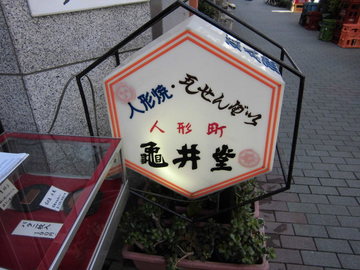
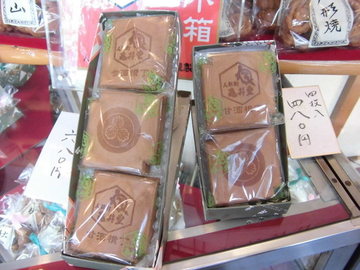
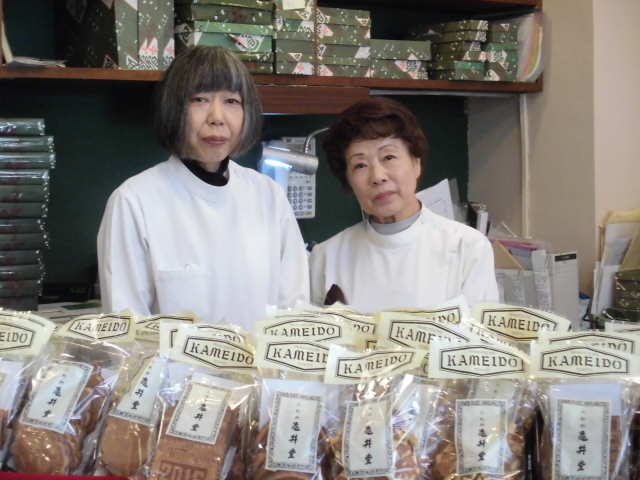
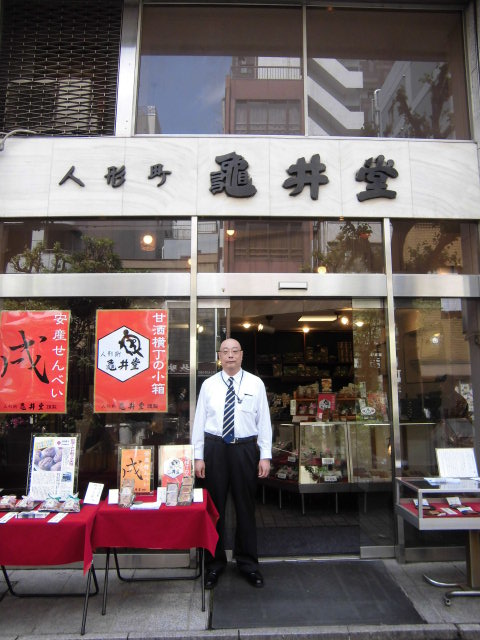
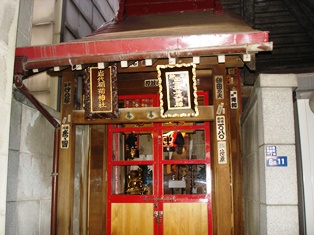
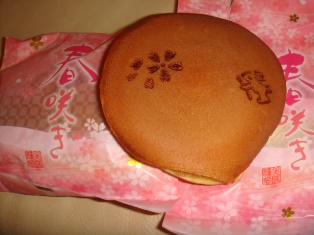
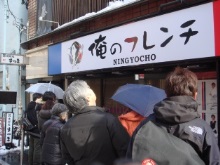
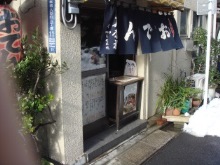
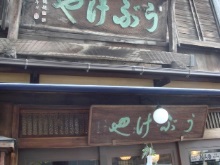
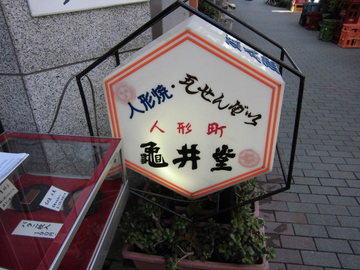
我去了瓦煎餅的有名店人形町龜井堂先生。
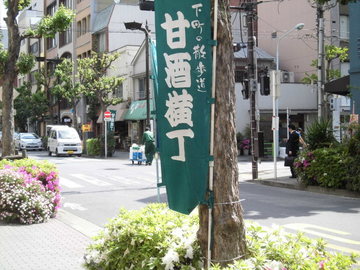
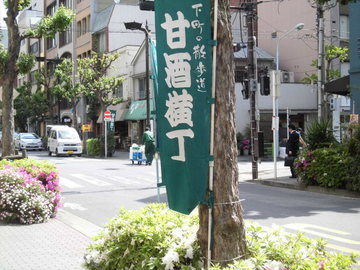
在日本甘酒橫丁十字路口向濱町公園方向前進數十米的右手邊。
One of the most famous and established Japanese confectionery is Kawarasenbei made and sold at Ningyocho Kameido. The head store is located along Amazake Yokocho Street.
其實我不喜歡瓦煎餅。 但是,自從收到人形町龜井堂先生的瓦煎餅後,這個概念被顛覆了。至今為止吃過的東西是什麼呢?為什麼這麼不一樣呢?我毫不猶豫地向社長佐佐木先生提出了質樸的疑問,他滿面笑容地回答了我。
“我們非常嚴格地遵守創業以來的製法。 除了砂糖、小麥粉、雞蛋、蜂蜜以外,不使用其他材料。 另外,完全不使用保存費,過了3天的裝袋人偶燒會從店裡取下。”他說。 遵守傳統貫徹品質管理是美味的秘訣。 保護簾子是這樣的吧。
For long time, Kawarasenbei, which is the nomenclature of the traditional japanese bisquit, was not one of my favorite sweets, but after I have experienced Kameido's delicacy, my whole image of this bisquit have changed. What have I been eating before? Why is this so good and special?
Mr. Kenji Sasaki, the president of the company gave me an answer distinctly and that is;
"We have not changed the recipe ever since company's foundation. We only use sugar, flour, egg, and honey. No preservative included and no display if the product (packed ningyoyaki) is over 3 days."
So, traditional recipe and strict quality control may be the key points.
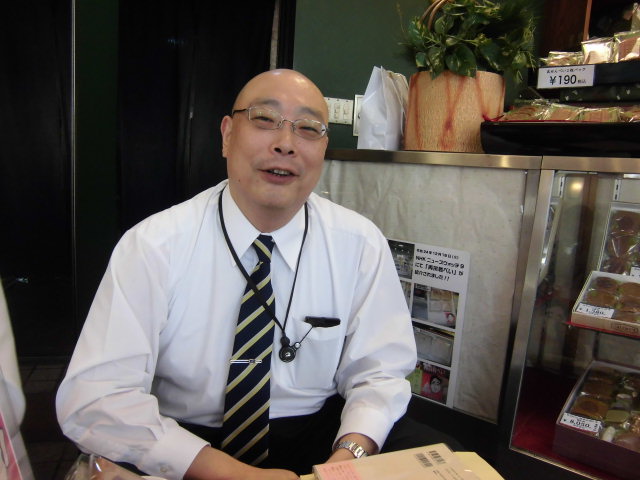
然後從社長那裡學到了人形町龜井堂的由來。
1873年,從創立於神戶元町的龜井堂總店,1929年,由從江戶初期開始住在東京的世家人形町佐佐木家嫡流的分支形式委託的是第一代人形町龜井堂的主人佐々木顯發先生。 相當於揮毫寫著京橋的柱子橋名的佐佐木支陰的孫子。
另外,佐佐木支陰的父親信濃守顯發是幕府末期的重要人物,是大人的旗本。
The first Kameido store, famous for its product Kawarasenbei, had started its business in Kobe in 1874. In 1927, Mr. Sasaki's grandfather Genpatsu Sasaki was given privilege to use the name "Kameido" and start a business of his own in Tokyo after many years of training.
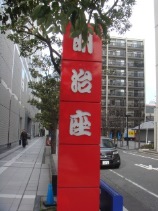
Genpatsu's grandfather was Shiin Sasaki who is famous for the calligraphy of the Kyobashi bridge pillar.
Genpatsu's great grandfather, Shinanonokami Akinobu who was great grandfather of Genpatsu was high ranked magistrate during Edo era.
朝散大夫信濃守顯發()
幕府末期歷任江戶南北町奉行和外國奉行,其名奉行模樣可以通過落語《佐佐木政談》得知。
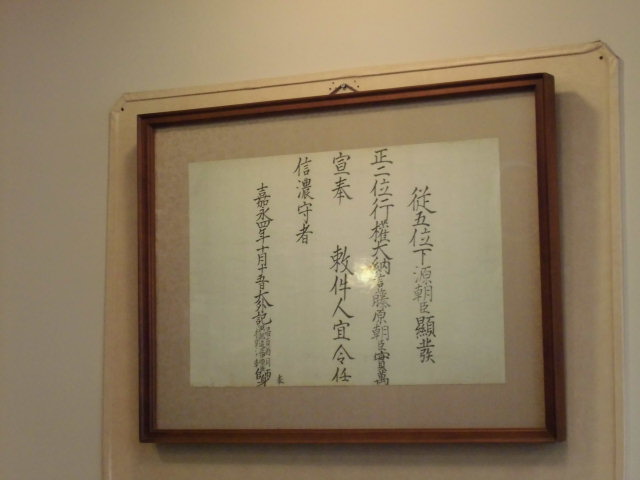
另外,總店還提出了從朝廷宣下信濃守任官的朝廷的宣旨。
相當於人形町龜井堂第一代店主佐々木顯發的曾祖父。
Shinanonokami Akinobu
During Edo era, Akinobu was high ranked magistrate bugyo in charge of finance, law, and foreign affairs. His management competence is known through Rakuko (Japanese comic story), "Sasaki Seidan (political talk)". He was honored by Emperor as Shinannookami. The written imperial order can be seen at Ningyocho Kamiedo.
Akinobu is the great grandfather of the founder of Ningyocho Kameido, Genpatsu Sasaki.
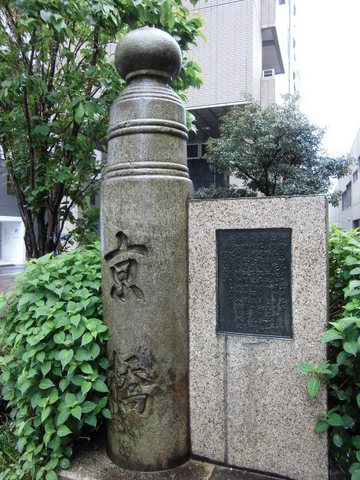
佐佐木支陰
信濃守顯發的長子、漢學家、詩人。 揮毫的“京橋”的柱子至今仍作為“京橋碑”給銀座中央大街帶來風格,被指定為中央區的區民有形文化遺產。
是佐佐木顯發的祖父。
Shiin Sasaki
The firstborn son of Akinobu who was scholar and poet. The name of the Kyobashi bridge engraved on the pillar of the bridge which is registered as tangible cultural asset of the city of Chuo-ku, had been written by Shiin.
Shiin is the grandfather of the founder of Ningyocho Kamiedo, Genpatsu Sasaki.
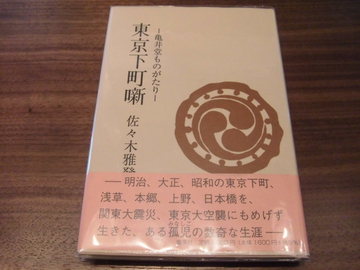
佐佐木顯發
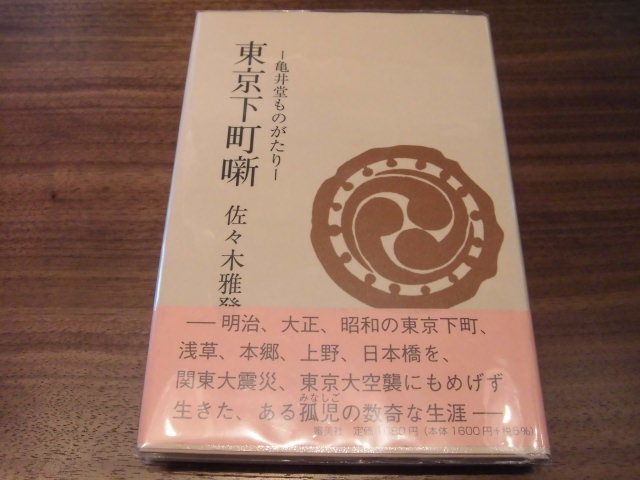
人形町龜井堂的第一代店主。 雖然是士族出身,但從小就作為奉公,在幕府相互解後的混亂、大正大地震、昭和大戰等動蕩的時代以機智和才智跑過去取得成功的快男兒。 被神戶的龜井堂總本家的創始人和上野龜井堂的主人認可,被任命為一家店。 《~龜井堂物語~東京下町說唱》是顯發的三子佐佐木雅發從父親那裡聽取總結的記錄文件,詳細記述了當時的街道、明治後半期到昭和的高度經濟成長期的史實,是一本作為歷史書也能享受的書籍。
顯發相當於現任社長的祖父。
Genpatsu Sasaki
The founder of Ningyocho Kameido. Though born in noble family, Genpatsu had to make a living after the great reform of the government. He had gone through the confusion of Meiji era, survived the great earthquake of Taisho era, and lived through the World War of Showa era, and won his success with his wit and talent. After years of training, he was given privilege to use the name "Kameido" and start his own business in Tokyo. Genpatsu's biography "Kameido Story" written by his third son can also be enjoyed as a history book which also writes about the culture and historical events from Meiji to Showa.
Genpatsu is the grandfather of Mr. Kenji Sasaki, now president of the company.
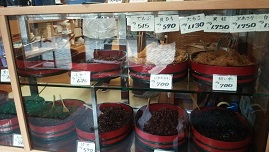
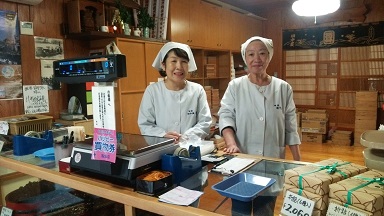
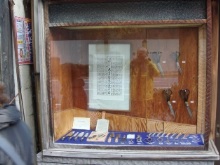
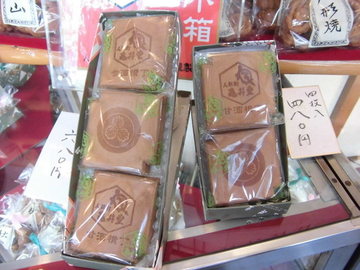
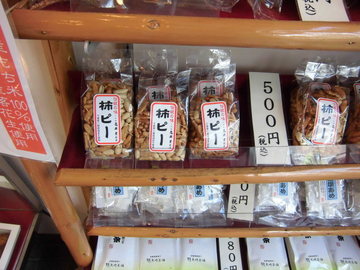
人形町龜井堂先生的瓦煎餅、人形燒是在總店大樓3樓和6樓製作的,隨時都可以買到剛做好的東西。 而且瓦煎餅很輕,攜帶方便,而且常溫下可以保存3個月,所以不論季節都作為禮物被珍視。 瓦煎餅各包裝2~3片,不用擔心濕氣。 另外,使用從社長的想法中誕生的國產花生製作的柿餅大受好評,也有顧客一起購買。 為了維持品質沒有量產,建議儘早去買。
Kawarasenbei (japanese bisquit) and Ningyoyaki (sponge cake filled with red bean paste) are freshly made at the upper floor of the store. Kawarasenbei is made without any perservative, neverthelesss keeps at least for two months. It is wrapped in a small portion to avoid moist. Since Kawarasenbei is so light to carry, many people buy them for souvenirs.
The current popular selling line is Kakipea (peanuts and spicy rice crackers mix) using peanut only made in Japan, which came through the idea of Mr. Sasaki. Since it is so crispy and good, some customers buy them in bulk. To keep the good quality of the product, Kakipea is not produced in large quantitiesass, so if you buy them, visiting the store in early hours is recommended.
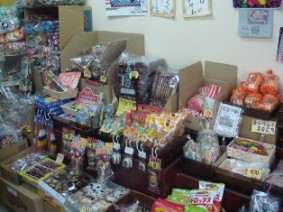
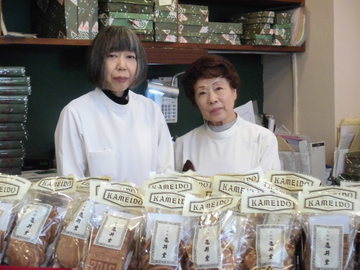
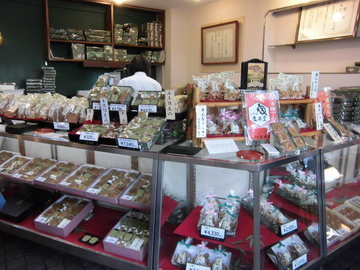
因為品種豐富所以很猶豫,但是可以給我一些適合用途的選擇方法。
Varieties of products are displayed, but you can have an appropriate advice at the store.
 <補充>
<補充>
(摘自《~龜井堂物語~東京下町物語》)
Quote from "Kameido Story"
*************************************************************
最近,谷崎潤一郎和松子夫人也來買東西。 披著黑色印巴內斯的谷崎沒有進店裡,而是站在人行道的邊緣仰望店鋪的招牌,有時會像看店裡的關係一樣看,松子夫人很親切地進入店裡,說了很多話。
In these days, *Junichiro Tanizaki visited the store with his wife Matsuko. He wore black inverness coat, did not get in to the store but stood at the edge of the sidewalk, looking up at the signboard, sometimes peeking inside. Matsuko walked in and chatted with the shopkeeper.
*Junichiro Tanizaki: Japanese author, one of the major writers of modern Japanese literature.
*************************************************************
谷崎潤一郎夫婦是在家裡吃瓦煎餅呢,還是作為特產帶去的呢,一想到能吃到和當時一樣的味道,就有點開心了。
Did Tanizaki and his wife tasted the sweets at home or did they brought it to someone as a souveniour? Kawarasenbei that you can have now tastes as same as their time.
 佐佐木社長,非常感謝。
請永遠把美味的點心送給世間。
Thank you very much Mr. Sasaki!
A great appreciation for the great story.